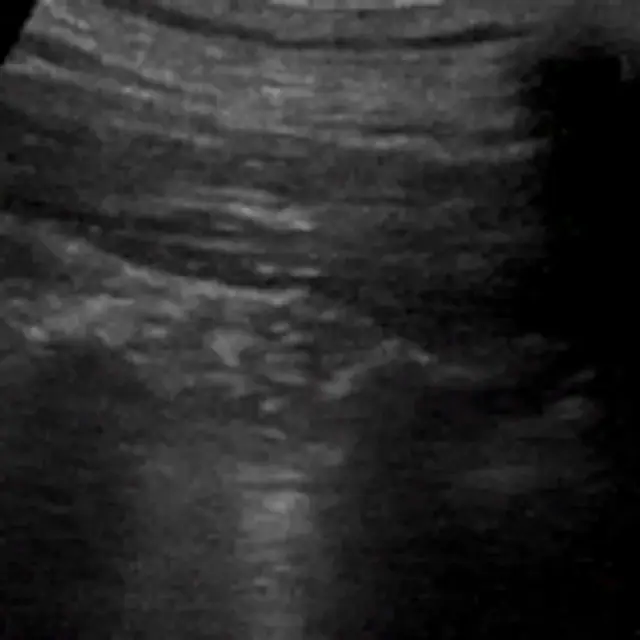
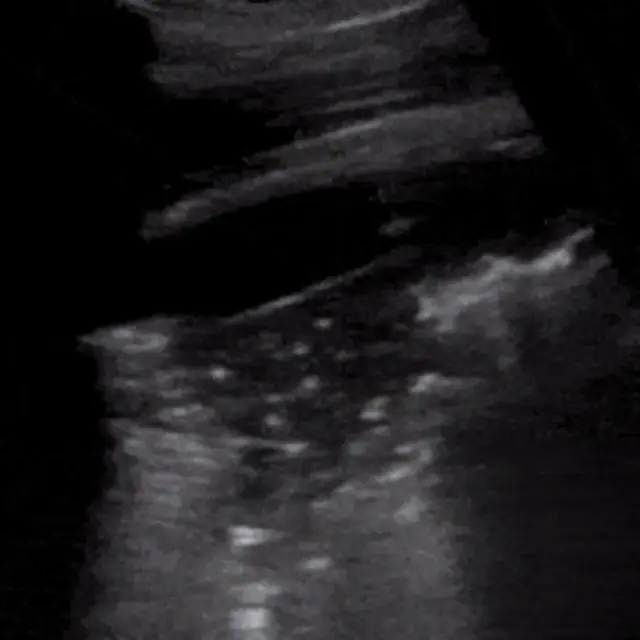
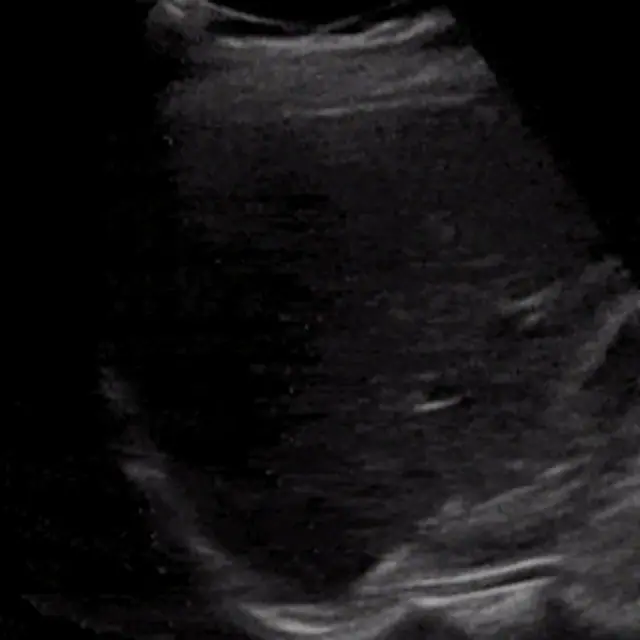
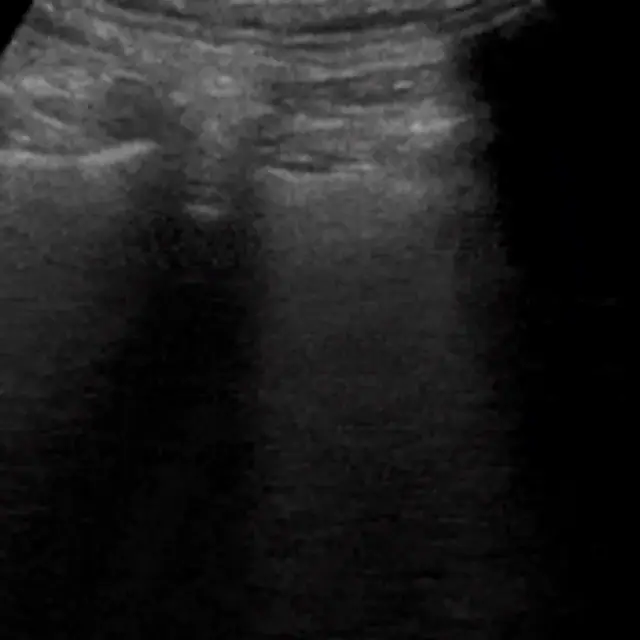
Identifying gallstones on ultrasound
Learning objectives
- Recognize the stone-plus-shadow pair of signs
- Separate cholelithiasis from cholecystitis
- Avoid the classic gallbladder pitfalls
Step-by-step approach
- 1
Find the gallbladder
Subcostal, long axis: an anechoic pear-shaped structure beneath the liver edge. Fasting improves distension.
- 2
The stone
Echogenic focus in the lumen + clean posterior acoustic shadow + gravity-dependent movement on repositioning. All three make the diagnosis.
- 3
Clean vs dirty shadow
Stones cast clean anechoic shadows. Bowel gas casts 'dirty' shadows with reverberation. Following the shadow's character prevents the classic error.
- 4
Cholecystitis check
Wall >3 mm, pericholecystic fluid, sonographic Murphy sign, distension. Stones without these = uncomplicated cholelithiasis.
- 5
Pitfalls
The wall-echo-shadow sign of a stone-filled gallbladder mimics bowel; polyps don't shadow or move; sludge layers without discrete shadowing.
Common mistakes
- Missing stones impacted in the gallbladder neck
- Calling bowel gas a stone (dirty shadow)
- Diagnosing cholecystitis on stones alone
Summary checklist
- Lumen fully swept
- Shadow character assessed
- Wall measured
- Murphy sign tested
- CBD checked
Ask RADSpace about this guide
AI responses are for education and may contain errors. RADSpace is not for primary clinical diagnosis.